When we hear the word “autism,” we often imagine a single set of characteristics. However, Autism Spectrum Disorder (ASD) is a vast and varied condition, and understanding its true nature is the first step toward providing meaningful support. The term “spectrum” is key—it signifies that no two individuals with autism are alike, they can have different levels of autism and their support needs can differ dramatically.
To help clinicians and families better understand these differences, the Diagnostic and Statistical Manual of Mental Disorders, 5th Edition (DSM-5) introduced a tiered system based on the level of support an individual requires. This framework helps to move the focus from a “one-size-fits-all” diagnosis to a personalized plan of care.
So, let’s explore what the three levels of autism truly mean and why this classification is so important.
The Three Levels of Autism Spectrum Disorder
The levels of autism are not a measure of a person’s intelligence or value; instead, they are a practical guide to the degree of support needed for social communication and for restricted, repetitive patterns of behavior.
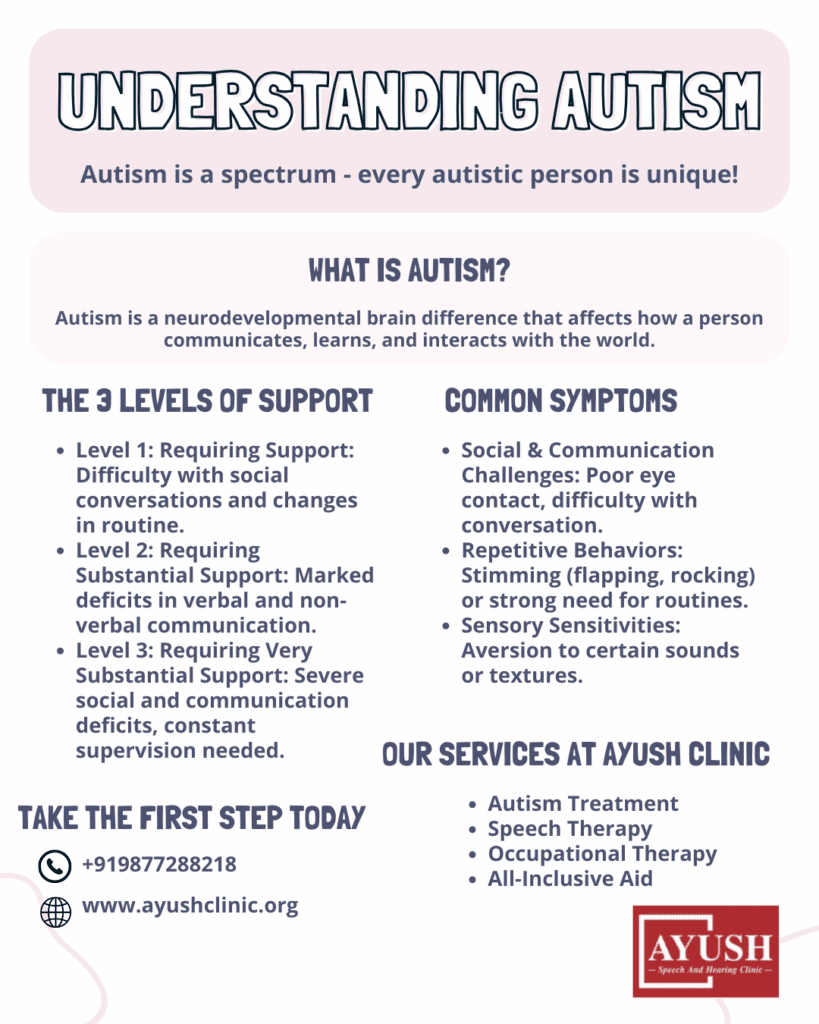
Level 1: “Requiring Support”
An individual at Level 1 of the autism spectrum needs support to function in their daily life. While their challenges may not always be immediately obvious, they often struggle with social communication deficits and inflexibility in their routines.
Key Characteristics of Level 1 Autism:
- Social Communication: They may have difficulty initiating conversations and may struggle with the natural give-and-take of social interaction. This can make forming friendships challenging.
- Behavior and Routines: They might find it difficult to transition between activities or cope with unexpected changes. Their adherence to routines can be a source of comfort, and any disruptions can cause significant distress.
- Sensory Issues: While they may not be as pronounced as in other levels, sensory sensitivities to things like sounds or certain textures can still affect their daily life.
Without the right support, these difficulties can cause noticeable impairments. For example, a child may appear withdrawn at school, or an adult may struggle to maintain a professional network.
Level 2: “Requiring Substantial Support”
Individuals at Level 2 require more significant, or “substantial,” support compared to those at Level 1. Their challenges are more pronounced and are often apparent to casual observers.
Key Characteristics of Level 2 Autism:
- Social Communication: They show marked deficits in verbal and nonverbal communication. They may have very limited initiation of social interactions and their responses to social overtures are often reduced or atypical. For instance, they might speak in simple sentences or only on their specific, focused interests.
- Behavior and Routines: The presence of repetitive behaviors is more frequent and noticeable. These behaviors, often referred to as “stimming,” can include hand-flapping, repetitive jumping, or other self-stimulatory actions. These behaviors can interfere with their ability to function in a variety of contexts and they may find it extremely difficult to cope with any change to their routine.
Level 3: “Requiring Very Substantial Support”
This level represents the most severe needs on the spectrum, where an individual requires “very substantial support” for almost all daily routines. Their social and communication impairments are profound and often severely limit their ability to function independently.
Key Characteristics of Level 3 Autism:
- Social Communication: Individuals at this level have severe deficits in both verbal and nonverbal social communication, which may cause a total absence of spoken language. They have very limited, if any, initiation of social interactions and a minimal response to social overtures from others.
- Behavior and Routines: They exhibit extreme difficulty with change and have restricted, repetitive patterns of behavior that can severely interfere with all areas of functioning. Aggressive behaviors, such as self-harm (e.g., biting themselves) or harming others, can be common due to frustration or an inability to communicate their needs. Due to these challenges, they often require constant supervision and support.
Common Symptoms of Autism: What to Look For
While the levels define the degree of support needed, there are a number of common symptoms that can appear across the autism spectrum. Not every person with autism will have all these symptoms, but a combination of them often forms the basis for a diagnosis.
- Social and Communication Deficits: Difficulty with social-emotional reciprocity, such as not responding to their name, poor eye contact, or a lack of interest in sharing their interests with others.
- Repetitive Behaviors: This can include the repetitive use of objects (like lining up toys), verbal repetition (echolalia), or a rigid adherence to routines.
- Sensory Sensitivities: Many individuals with autism have sensory issues, such as an aversion to certain sounds, textures, smells, or tastes. They may also be fascinated by visual patterns or movements.
- Highly Restricted Interests: They may have an intense, almost obsessive focus on a specific topic that is unusual in its intensity.
The Importance of Early Intervention and Diagnosis
The diagnostic process can be complex. Every child is unique, and some children’s symptoms may be less obvious than others, requiring a keen eye and a thorough evaluation by a professional. This is where the power of early intervention comes in.
Early intervention is the key to helping an autistic child reach their full potential. By providing therapy and support from a young age, children can develop essential social and communication skills, learn to manage challenging behaviors, and navigate their world with greater confidence. This is not about “curing” autism, but about providing the tools and strategies that empower the individual to live a fulfilling life.
The Power of Understanding
Ultimately, the goal of understanding the levels of autism is not to label a child but to help families, caregivers, and educators provide the right kind of support. A diagnosis is just the beginning of a journey—it is the first step toward unlocking a world of resources and therapies tailored to an individual’s unique needs. By embracing the full spectrum of autism and the official DSM-5 criteria, we can move from simple awareness to true, empathetic support.
Are you ready to give your child the tools to thrive? Don’t let uncertainty stand in your way. Contact Ayush Speech and Hearing Clinic today to schedule a consultation and take the first step toward a brighter future.
- Phone: +919877288218
- Website: https://ayushclinic.org/
- Address: Building / Gate No. 577, Opp. Vardan Hospital, Near Bus Stand, Mota Singh Nagar, Jalandhar -144022, Punjab, INDIA.